
navy soy instruction
Navy Sailor of the Year (SOY) Instruction: A Comprehensive Overview
The Sailor of the Year (SOY) instruction details a prestigious recognition program, evolving with initiatives like Sailor 2025,
focusing on talent management and acknowledging exceptional performance within the Navy’s diverse ranks.
This instruction outlines eligibility, nomination processes, selection criteria, and the significant awards bestowed upon honorees,
ensuring a fair and comprehensive evaluation of deserving sailors across all commands and operational environments.
Recent updates, post-2020, emphasize incorporating achievements from the last five years and recognizing educational accomplishments,
reflecting the Navy’s commitment to continuous learning and professional development for its dedicated personnel.
Historical Context of the SOY Program
The Navy’s Sailor of the Year (SOY) program boasts a rich history, originating as a means to formally recognize
sustained superior performance and dedication amongst its enlisted personnel. While precise origins are difficult to pinpoint,
the program solidified in the mid-20th century, evolving from localized command recognition to a fleet-wide initiative.
Initially, the SOY award served primarily as a morale booster, highlighting exemplary sailors and setting a standard
for professional conduct and operational readiness. Over decades, the program adapted to reflect the changing needs
and priorities of the Navy, mirroring advancements in technology, operational tempo, and the evolving demographics
of the force.
Early iterations focused heavily on technical proficiency and adherence to naval traditions. However, as the Navy
embraced a more holistic approach to sailor development, the SOY criteria broadened to encompass leadership qualities,
community involvement, and contributions to overall mission effectiveness. This historical evolution laid the groundwork
for the modern SOY program.
Evolution of the SOY Program & Sailor 2025
The Sailor of the Year (SOY) program has undergone significant evolution, particularly in response to the Sailor 2025 initiative.
This modernization effort aims to attract, develop, and retain top talent within the Navy, necessitating a re-evaluation of
how high-performing sailors are identified and rewarded.
Recent updates, announced in 2020 and beyond, demonstrate a deliberate shift towards a more comprehensive assessment
of a sailor’s contributions. The focus now extends beyond traditional operational achievements to include educational pursuits,
skill development, and demonstrated leadership potential. This aligns directly with Sailor 2025’s emphasis on a highly
skilled and adaptable workforce.
The integration of talent management principles into the SOY selection process is paramount. The Navy working group’s
recommendations underscore the importance of recognizing sailors who not only excel in their primary duties but also actively
seek opportunities for professional growth and contribute to a positive command climate. This evolution ensures the SOY
award reflects the Navy’s future needs.
Purpose of the Sailor of the Year Instruction
The primary purpose of the Sailor of the Year (SOY) instruction is to establish standardized procedures for recognizing
and honoring sailors who demonstrate exceptional dedication, performance, and leadership qualities throughout the year.
This instruction serves as the governing document for all commands participating in the SOY nomination and selection process.
It aims to foster a culture of excellence within the Navy by providing a clear framework for identifying and rewarding
those who consistently exceed expectations and embody the core values of honor, courage, and commitment. The instruction
ensures fairness and transparency in the selection process, promoting healthy competition and motivating sailors to strive
for peak performance.
Furthermore, the SOY instruction details the specific criteria for eligibility, nomination requirements, and the awards
conferred upon winners, including command coins and the Navy and Marine Corps Achievement Medal for Junior and Blue
Jacket selections. It’s a vital tool for maintaining a robust recognition program.

Eligibility Criteria for SOY Nominations
Sailors must meet specific rank and time-in-service requirements to be nominated, while demonstrating sustained superior performance and embodying naval values.
Certain conduct and performance issues automatically disqualify candidates, ensuring only the most deserving sailors are considered for this prestigious honor.
Who Can Be Nominated? (Rank & Time in Service)
Generally, nominations are open to sailors holding paygrades E-5 through E-9, encompassing both enlisted personnel and those serving in specific rates across the fleet. However, specific command instructions may introduce slight variations to these guidelines, so careful review is crucial.
Regarding time in service, nominees typically must have completed at least one year of service, demonstrating a commitment to naval service and providing sufficient time to showcase sustained exceptional performance. This requirement ensures nominees have had ample opportunity to contribute meaningfully to their commands.
Furthermore, sailors must be in good standing, without any pending disciplinary actions or significant negative performance evaluations that could detract from their eligibility. Commands are responsible for verifying these criteria before submitting nominations, ensuring a fair and competitive selection process.
Performance Requirements for Consideration
Sailors nominated for SOY must demonstrate sustained superior performance in their primary duties, consistently exceeding expectations and contributing significantly to their command’s mission readiness. This includes a proven track record of technical proficiency, leadership qualities, and a dedication to naval excellence.
Exceptional performance extends beyond routine tasks; nominees should exhibit initiative, problem-solving skills, and a proactive approach to improving processes within their work center or department. Documented achievements, such as successful project completions or innovative solutions, are highly valued.
Furthermore, nominees are evaluated on their embodiment of core Navy values – honor, courage, and commitment – as demonstrated through their actions and interactions with colleagues and superiors. A strong record of professional development and continuous learning is also a key consideration.
Disqualifying Factors for SOY Nominations
Certain actions or circumstances automatically disqualify a sailor from SOY consideration, ensuring the integrity and prestige of the award. Any substantiated allegations or findings of misconduct, including violations of the Uniform Code of Military Justice (UCMJ), immediately render a sailor ineligible.
Similarly, sailors with a current or recent history of disciplinary action – such as non-judicial punishment (NJP) or administrative separation proceedings – will not be considered. A pattern of negative counseling remarks or performance deficiencies also constitutes a disqualifying factor.
Furthermore, any attempt to falsify information on the nomination package, or to otherwise manipulate the selection process, will result in immediate disqualification. Maintaining fairness and transparency is paramount to the SOY program’s success.

The Nomination & Selection Process
The SOY process begins at the command level, with nominations forwarded through the chain of command, culminating in selection boards evaluating packages based on established criteria.
These boards, composed of senior enlisted personnel, meticulously review each nominee’s record, assessing their performance, leadership, and overall contribution to naval service.
Command Level Nomination Procedures
Initiating the Sailor of the Year nomination process requires commands to establish a local selection board, ensuring a fair and impartial evaluation of eligible personnel. This board, typically comprised of leading petty officers and junior officers, reviews nominees based on performance during the preceding five-year period, as per current instruction guidelines.
Nomination packages must include a comprehensive citation detailing the sailor’s achievements, highlighting significant contributions, sustained superior performance, and demonstrated leadership qualities. Educational accomplishments, such as completed courses and training certifications, are crucial components of a strong nomination.
Commands are responsible for verifying all information, ensuring accuracy and completeness before forwarding the nomination to higher echelons. A well-prepared package, showcasing the sailor’s dedication and impact, significantly increases their chances of success throughout the selection process;
Forwarding of Nominations to Higher Echelons
Once command-level selections are finalized, nominations proceed through a tiered forwarding process, beginning with immediate superior commands (ISCs). Each echelon meticulously reviews the submitted packages, verifying adherence to established criteria and ensuring completeness of documentation.
Forwarding authorities are responsible for endorsing nominations, adding their assessment of the nominee’s qualifications and potential for success at higher levels. This endorsement signifies support and confidence in the sailor’s demonstrated performance and contributions.
Strict adherence to established timelines is critical, as delays can disqualify nominations from further consideration. Nominations are typically submitted electronically through designated Navy systems, ensuring secure and efficient transmission to the appropriate selection boards. Maintaining clear communication throughout this process is paramount.
Selection Board Composition & Criteria
The Sailor of the Year (SOY) selection boards are comprised of senior enlisted personnel, representing diverse ratings and operational experiences. This composition ensures a comprehensive and impartial evaluation of nominees from across the fleet. Board members are carefully selected for their expertise, integrity, and commitment to recognizing exceptional performance.
Evaluation criteria center on sustained superior performance, demonstrated leadership qualities, and significant contributions to the Navy’s mission. Boards assess nominees’ achievements over the preceding five years, considering both professional accomplishments and personal growth.
Emphasis is placed on alignment with Sailor 2025 initiatives, including talent management and continuous learning. Nominees are evaluated on their embodiment of Navy core values and their potential for future leadership roles. The board’s deliberations are thorough and objective, aiming to identify the most deserving sailors.
Awards & Recognition for SOY Winners
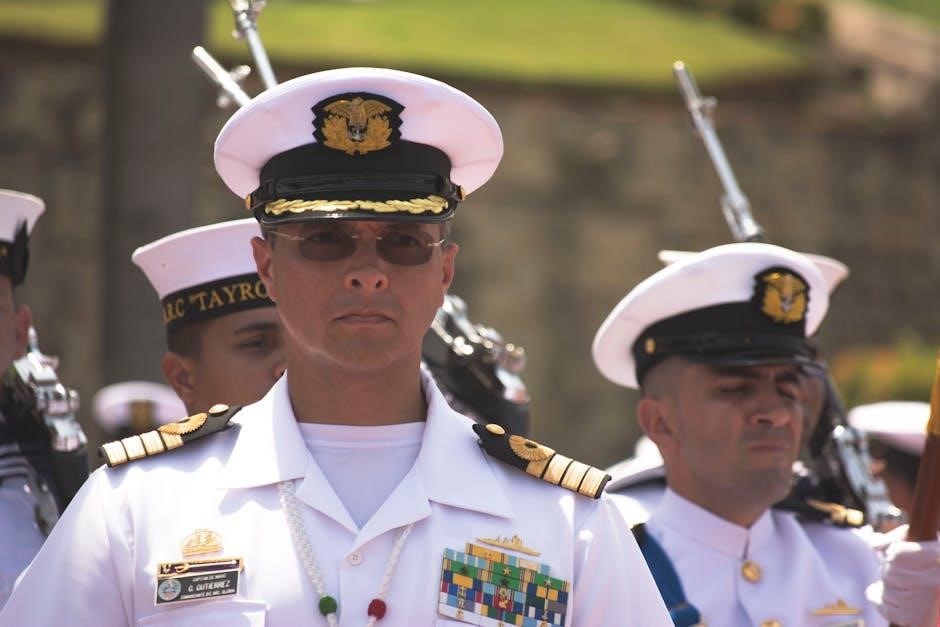
SOY winners receive a command coin as a symbol of appreciation, with Junior and Blue Jacket winners also earning the Navy and Marine Corps Achievement Medal.
These accolades acknowledge outstanding dedication and performance, potentially opening doors to further advancement and unique professional opportunities within the Navy’s structure.
Command Coin Presentation
The presentation of a command coin to the Sailor of the Year, Junior Sailor of the Year (JSOY), and Blue Jacket of the Year (BJOY) represents a deeply valued tradition within naval culture. This isn’t merely a symbolic gesture; it’s a tangible acknowledgement of exceptional dedication, superior performance, and unwavering commitment to duty.
Command coins, often personally selected and presented by the commanding officer, embody the unit’s pride and serve as a lasting memento of the sailor’s achievements. Receiving a coin signifies inclusion within a select group of high-performing individuals, fostering camaraderie and reinforcing positive behaviors.
The coin serves as a constant reminder of the standards expected and the impact the sailor has made, encouraging continued excellence and leadership. It’s a physical representation of respect, gratitude, and the enduring bonds forged within the naval community.

Navy and Marine Corps Achievement Medal (JSOY/BJOY)
The Navy and Marine Corps Achievement Medal is a significant award presented to both the Junior Sailor of the Year (JSOY) and the Blue Jacket of the Year (BJOY), recognizing their outstanding contributions and dedication to service. This decoration signifies a level of achievement beyond routine performance, highlighting exceptional professionalism and initiative.
Awarded by the Superintendent at the United States Naval Academy, the medal represents formal acknowledgement of the sailor’s positive impact on their command and the Navy as a whole. It’s a testament to their hard work, technical proficiency, and commitment to upholding naval traditions.
Receiving this medal is a prestigious honor, demonstrating a commitment to excellence and serving as a stepping stone for future career advancement. It’s a tangible symbol of recognition and a source of pride for the recipient, their family, and their command.
Potential for Further Advancement & Opportunities
Being recognized as a Sailor of the Year, at any level (SOY, JSOY, or BJOY), significantly enhances a sailor’s career trajectory. The visibility gained through this prestigious award opens doors to a wider range of opportunities for professional growth and development within the Navy.
Selection as SOY often leads to increased consideration for leadership roles and specialized training programs, fostering a path towards greater responsibility and influence. This recognition demonstrates a commitment to excellence, making the sailor a valuable asset to any command.
Furthermore, SOY winners may be nominated for higher-level awards and potentially selected for unique assignments, broadening their experience and skillset. This program actively cultivates future leaders, investing in the Navy’s most promising personnel.

Recent Updates to the SOY Program (Post-2020)
Post-2020 updates to the SOY program prioritize talent management, aligning with Sailor 2025, and emphasize achievements within the last five years for consideration.
Focus on Talent Management in the SOY Selection
The Navy’s recent overhaul of the Sailor of the Year (SOY) program places a significant emphasis on talent management, moving beyond traditional metrics to assess a sailor’s potential and contributions to the Fleet’s overall readiness.

This shift, recommended by a working group of senior enlisted leaders, aims to identify sailors who not only excel in their primary duties but also demonstrate leadership qualities, a commitment to continuous improvement, and the ability to adapt to evolving naval challenges.
Selection boards now consider a broader range of accomplishments, including participation in developmental assignments, mentorship roles, and contributions to innovative solutions. The goal is to recognize sailors who embody the Navy’s core values and are poised to become future leaders, fostering a culture of excellence and innovation throughout the ranks.
Incorporating Achievements from the Last Five Years

A key update to the Sailor of the Year (SOY) instruction involves a broadened timeframe for considering a nominee’s accomplishments. Previously, evaluations often focused on more recent achievements; however, the current guidance explicitly encourages nominators to include significant contributions made within the preceding five years.
This change allows for a more comprehensive assessment of a sailor’s sustained performance and dedication, recognizing that impactful contributions may not always occur within a single reporting period.
Nominations should detail achievements, awards, and impactful actions from the past five years, providing a holistic view of the nominee’s value to the Navy. This includes previous selections as Blue Jacket or Junior Sailor of the Year, demonstrating a consistent pattern of excellence and commitment to service.
Emphasis on Educational Accomplishments & Training
The updated Sailor of the Year (SOY) instruction places increased importance on a nominee’s pursuit of educational opportunities and professional training. Nominations should thoroughly document any courses, certifications, or degrees completed within the evaluation period, and even within the five-year window.
This isn’t limited to formal degree programs; completion certificates from Navy-sponsored training, civilian courses, or self-improvement initiatives are all valuable. Demonstrating a commitment to continuous learning showcases initiative and a dedication to enhancing skills.
Highlighting how these educational accomplishments directly contribute to improved job performance or benefit the command is crucial. The instruction aims to recognize sailors who proactively seek knowledge and apply it to excel in their duties and contribute to the Navy’s overall mission readiness.

Distinction Between SOY, JSOY, and BJOY
The Navy recognizes exceptional sailors through three distinct annual awards: Sailor of the Year (SOY), Junior Sailor of the Year (JSOY), and Blue Jacket of the Year (BJOY).
Defining Junior Sailor of the Year (JSOY)
The Junior Sailor of the Year (JSOY) award specifically recognizes outstanding performance by sailors in the paygrades of E-3 and E-2, acknowledging their dedication and contributions early in their naval careers. This prestigious recognition highlights sailors demonstrating exceptional technical skills, professional bearing, and a commitment to naval service.
JSOY nominees are evaluated on their mastery of job-specific competencies, adherence to Navy standards, and demonstrated leadership potential, even at the junior level. Selection criteria emphasize a consistent record of excellence, proactive problem-solving, and a positive impact on their command and fellow sailors.
Winning the JSOY award carries significant recognition, including a command coin and the Navy and Marine Corps Achievement Medal, presented by the Superintendent, signifying the Navy’s investment in and appreciation for its rising talent. It serves as a crucial stepping stone for future career advancement.
Defining Blue Jacket of the Year (BJOY)
The Blue Jacket of the Year (BJOY) award honors exceptional performance by sailors holding the paygrade of E-5, recognizing their increased responsibility and leadership within the Navy’s operational structure. This award acknowledges sailors who consistently exceed expectations in their professional duties and demonstrate a strong commitment to mentorship.
BJOY nominees are assessed on their technical expertise, ability to lead and motivate junior sailors, and contributions to command effectiveness. Evaluation criteria prioritize a proven track record of initiative, problem-solving, and dedication to upholding Navy core values. They are expected to be role models for their peers.
Similar to the JSOY, BJOY winners receive a command coin and the Navy and Marine Corps Achievement Medal, signifying the Navy’s recognition of their valuable service and potential for continued growth. This award serves as a significant milestone in their naval career progression.

Comparative Analysis of Award Significance
While all three awards – SOY, JSOY, and BJOY – recognize exceptional naval personnel, their significance differs based on experience and rank. The SOY represents the pinnacle of achievement, awarded to a sailor demonstrating sustained superior performance across all paygrades. It signifies overall excellence and leadership potential.
JSOY acknowledges outstanding contributions from E-3 and E-4 sailors, highlighting early career success and dedication. BJOY, for E-5s, recognizes the transition to increased responsibility and leadership roles, showcasing their ability to mentor and guide junior personnel effectively.
Each award serves as a stepping stone, with JSOY and BJOY often considered precursors to SOY consideration. Winning any of these awards demonstrates a commitment to naval service and opens doors to further advancement and professional opportunities within the fleet.